BIOLOC’s Final Chapter: Growing Roots for an Inclusive Bioeconomy
After three years of collaborative work across twelve European regions, the BIOLOC project concludes with a clear message: the transition to a circular bioeconomy must be inclusive, community-driven, and sustainable.
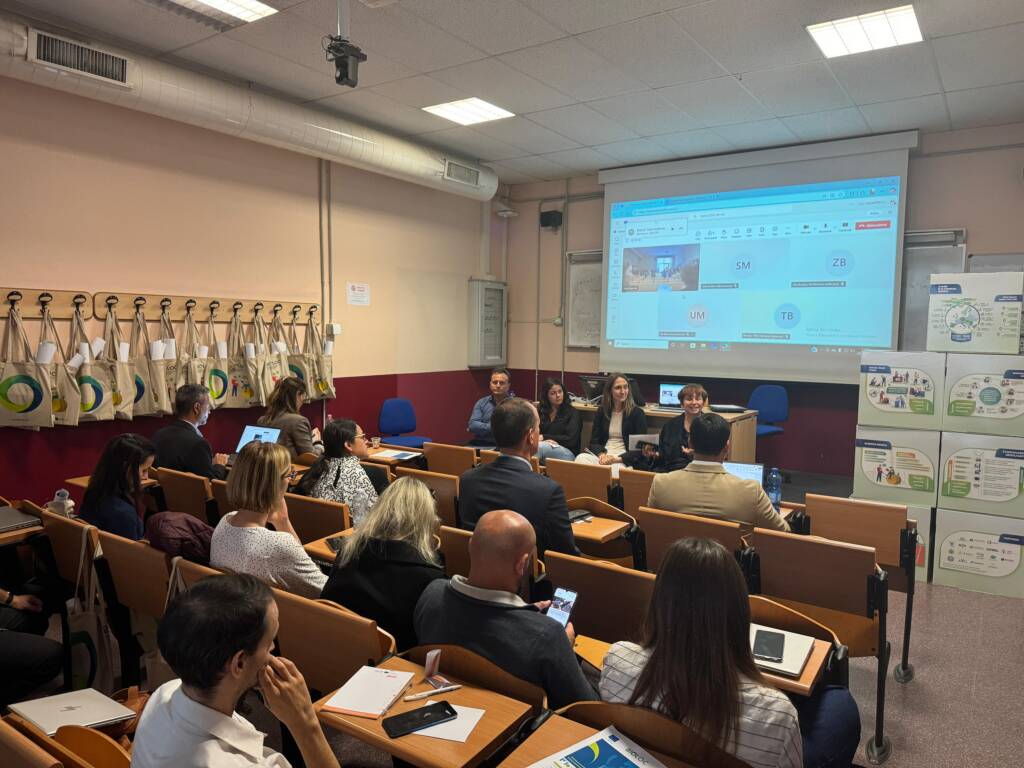
Held as a side event of the IFIB Conference on 24 September 2025 in Turin, the BIOLOC Final Conference gathered partners, policymakers, civil society actors, and EU officials to celebrate the project’s results and discuss the road ahead. But beyond marking an end, the event served as a launchpad for future action.
From Local Innovation to Long-Term Impact
Throughout its implementation, BIOLOC has piloted a unique model of territorial regeneration that connects circular bioeconomy innovation with social inclusion, particularly targeting marginalised groups in rural and peri-urban areas.
Over the past year, efforts intensified to ensure the sustainability of results and institutional embedding of the regional BIOLOC Hubs. These efforts culminated in three interconnected achievements:
1. Anchoring BIOLOC in Local Strategies
From May to September 2025, each regional hub hosted a final event to showcase their inclusive business models, co-designed innovations, and governance tools. These events brought together local administrations, SMEs, cooperatives, and educators — demonstrating how inclusive circular bioeconomy can address concrete challenges like unemployment, depopulation, and environmental degradation.
Over 390 stakeholders participated across the regions, helping to validate Societal Readiness Level assessments, share lessons, and spark new collaborations. Several regions — such as Slovenia and Bulgaria — went further, integrating BIOLOC outcomes into regional planning documents and launching formal processes to institutionalise their hubs.
2. Formalising Commitments through MoUs
A major milestone was the signing of 11 Memoranda of Understanding (MoUs) by the end of the project. Developed from a shared template, these MoUs allow each regional partnership to adapt the hub model to its own context, while committing to continued cooperation on inclusive circular bioeconomy initiatives.
Signatories include municipalities, universities, development agencies, business networks, and social enterprises. In several cases, the MoUs not only formalise collaboration but also signal political support for integrating BIOLOC’s methods into local and national strategies.
3. Connecting to European Networks
BIOLOC actively promoted its results in European and international settings, ensuring its approach is visible and transferrable. Notably, the project’s inclusive innovation model was presented at the European Rural Circular Bioeconomy Conference (EURCBC) and IFIB 2025, where BIOLOC also maintained a dedicated exhibition stand.
Through participation in events and dialogue with initiatives such as the BIOEAST Initiative, the Rural Bioeconomy Alliance, and the RIBES Multi-Stakeholder Forums, BIOLOC successfully positioned its hubs within broader EU bioeconomy ecosystems — fostering new funding opportunities, policy linkages, and cross-border synergies.
A Living Legacy
The story of BIOLOC doesn’t end with the project. It continues through the regional hubs, the partners and signatories of the MoUs, and the tools and models now available for replication. From bioplastics labs on land reclaimed from criminal groups in Italy, to digital training for Roma youth in Hungary, and rural housing projects using straw-based biomaterials in the Netherlands, BIOLOC has shown what’s possible when innovation meets inclusion.
With roots planted firmly in the regions and branches reaching into European networks, BIOLOC offers a scalable model for social innovation in the bioeconomy — and a roadmap for others to follow.
.